
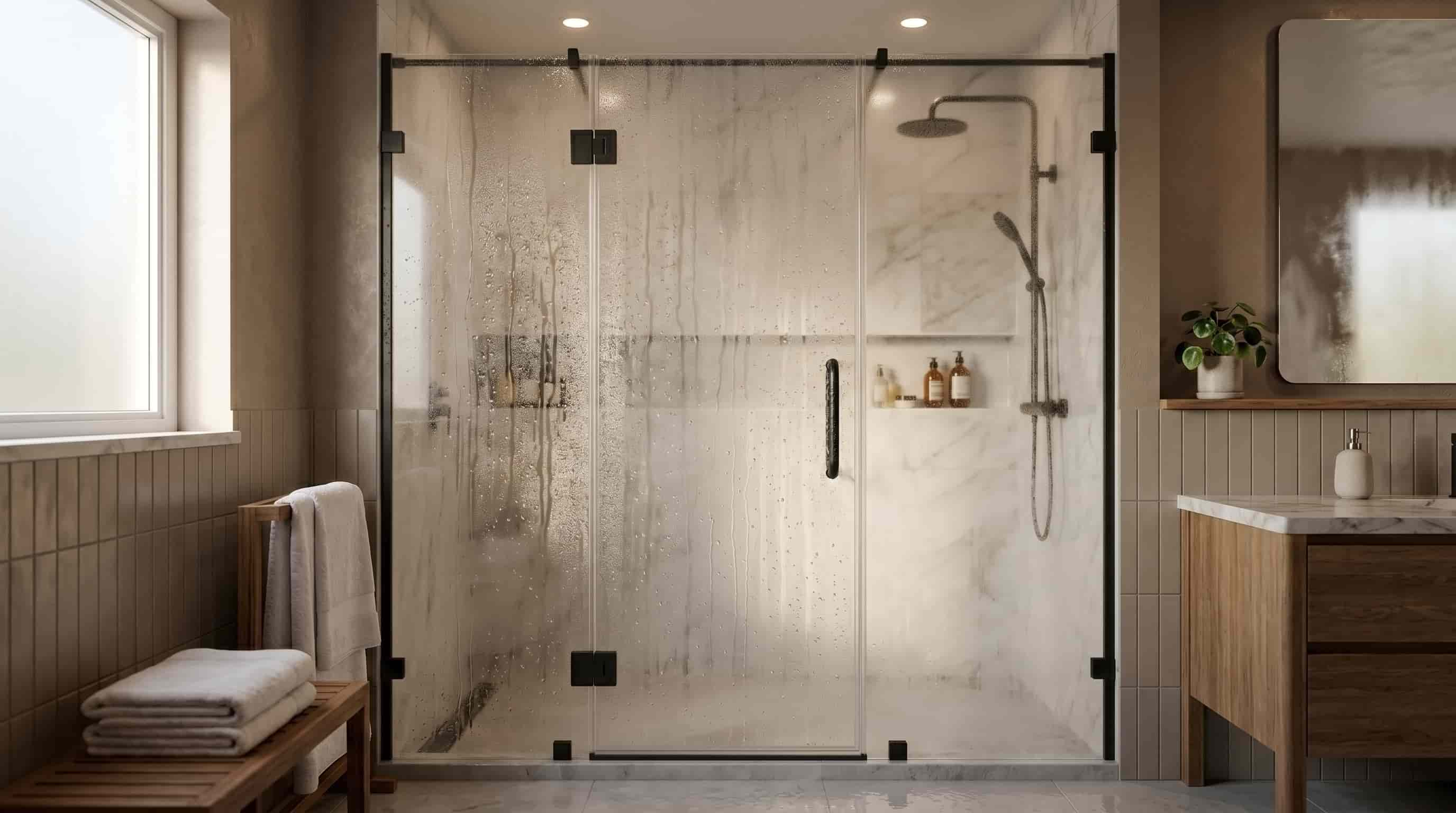
Steam Shower Glass Enclosures in Orlando: Design, Sealing and Installation Requirements
Steam showers have moved far beyond luxury hotel amenities. Across Orlando — from Dr. Phillips to Lake Nona, Winter Park to College Park — homeowners are transforming master bathrooms into personal spa retreats, and the glass enclosure is where the entire experience begins and ends.
But a steam shower is not a standard shower. The glass, hardware, sealing, and installation requirements are fundamentally different, and cutting corners on any one of them will result in steam leaks, moisture damage, fogged glass, and costly repairs. This guide covers everything you need to know before investing in a steam shower glass enclosure in Orlando.
What Makes a Steam Shower Glass Enclosure Different?
A steam shower generates temperatures ranging from 100°F to 120°F and humidity levels approaching 100%. That environment places demands on glass and hardware that a conventional shower enclosure simply never faces.
The key differences come down to four factors:
- Glass type and thickness — must withstand sustained thermal stress
- Sealing integrity — steam will find every gap, no matter how small
- Hardware compatibility — hinges, handles, and channels must be steam-rated
- Ventilation design — critical for preventing moisture from migrating into walls
Standard shower door installations are not automatically suitable for steam applications. If you're upgrading an existing enclosure or installing a new one specifically for steam, every element needs to be specified correctly from the start.
Glass Requirements for Steam Shower Enclosures
Tempered Safety Glass: The Non-Negotiable Standard
All steam shower glass enclosures must use tempered safety glass — this is both a practical necessity and a code requirement under Florida Building Code. When tempered glass breaks, it shatters into small, blunt-edged pieces rather than dangerous shards, a critical safety feature in a wet, enclosed, high-temperature environment.
Recommended Glass Thickness
| Glass Thickness | Best Application | Steam Suitability |
|---|---|---|
| 3/8 inch (10mm) | Standard shower doors | Suitable for smaller enclosures |
| 1/2 inch (12mm) | Frameless steam showers | Recommended for most steam applications |
| 3/4 inch (19mm) | Extra-large or heavy panels | Premium / commercial-grade installs |
For most residential steam showers in Orlando, 1/2-inch tempered glass is the industry-recommended standard. The added mass helps resist the thermal cycling that steam environments create and gives frameless panels the structural rigidity they need without relying on frames for support.
Low-Iron vs. Standard Clear Glass
Standard clear glass has a subtle green tint caused by iron content in the glass. In a steam shower where you've invested in high-end tile and finishes, that tint can dull the visual effect. Low-iron glass (sometimes called ultra-clear or starphire glass) offers near-perfect clarity — an increasingly popular choice among Orlando homeowners doing full bathroom renovations.
Glass Coatings for Steam Environments
One of the biggest challenges in a steam shower is condensation on glass surfaces. Two coating technologies address this:
- Hydrophobic coatings (e.g., ClearShield, EnduroShield): Cause water to bead and run off, reducing mineral deposits and cleaning frequency. These coatings are factory-applied and professionally recommended for steam applications.
- Anti-fog coatings: Less common and less durable, but useful in certain designs.
In Orlando's hard water areas, a hydrophobic factory coating is not just a convenience — it's a long-term protection investment that prevents etching from repeated mineral exposure.
Framed vs. Frameless vs. Semi-Frameless: Which Is Right for a Steam Shower?
Frameless Glass Enclosures
Frameless enclosures use thick tempered glass panels held in place by minimal hardware — typically wall-mounted hinges and a header or channel at the base. They are the gold standard for steam showers because:
- No metal frame means fewer points where steam can condense and corrode
- Easier to seal comprehensively along edges
- Visually open design suits Orlando's modern and transitional bathroom styles
- Low maintenance — no frame channels to trap mold and soap scum
The trade-off is cost. Frameless steam shower enclosures using 1/2-inch glass are a premium product, but for a steam application, they justify the investment.
Semi-Frameless Enclosures
Semi-frameless designs use minimal framing — often just a top track or side channel — combined with thicker glass. They represent a middle ground in both cost and performance, and can be made steam-suitable with proper sealing at all frame-to-glass contact points.
Framed Enclosures
Traditional framed enclosures with aluminum channels around all glass edges are generally not recommended for dedicated steam showers. The metal channels create multiple condensation points, are difficult to seal completely, and tend to trap moisture — a significant problem in Orlando's already-humid climate.
Sealing Requirements: The Most Critical Element
If there is one area where steam shower installations fail, it is sealing. Steam is not water — it is vaporized water that penetrates microscopic gaps that liquid water never would.
Where Sealing Is Required
Every junction in a steam shower enclosure must be sealed:
- Glass-to-wall joints (both vertical sides)
- Glass-to-floor joint (bottom seal or threshold)
- Door sweep (the seal along the bottom of the door panel)
- Header or top channel (if present)
- Hinge plates (where hardware meets the wall)
- Corner joints between glass panels
Sealant Materials for Steam Applications
| Sealant Type | Steam Suitability | Notes |
|---|---|---|
| 100% Silicone (neutral cure) | Excellent | Best choice for glass-to-tile and glass-to-glass |
| Acetoxy-cure silicone | Poor | Releases acetic acid; can corrode metal hardware |
| Latex caulk | Not suitable | Breaks down rapidly in steam environments |
| Steam-rated gaskets | Excellent | Used on door sweeps and magnetic seals |
100% neutral-cure silicone is the professional standard. It bonds well to glass, tile, and stone, remains flexible through thermal cycling, and resists the mold growth that destroys conventional caulk in humid environments.
The Door Seal System
The door itself requires a multi-point seal system:
- Bottom door sweep: A silicone or rubber sweep that closes the gap between the door and the shower floor or threshold.
- Magnetic seals or compression seals at the door-to-glass or door-to-wall meeting point.
- Header seal (for doors with a top track) to prevent steam from escaping over the top of the enclosure.
A properly sealed steam shower door should feel slightly resistant when you close it — evidence that the seals are making full contact. If the door closes too easily, steam will escape.
Installation Requirements for Steam Shower Glass in Orlando
Structural Substrate Requirements
Steam shower walls must be built on a moisture-resistant substrate. Standard drywall — even moisture-resistant green board — is not appropriate. Acceptable substrates include:
- Cement board (e.g., HardieBacker, Durock)
- Foam tile backer board (e.g., Wedi, Schluter Kerdi-Board)
- Waterproofing membrane systems applied over cement board
In Orlando's climate, where ambient humidity is already elevated for much of the year, a proper waterproofed substrate is essential to prevent mold growth behind the tile walls.
Glass Panel Installation Sequence
Professional installation of a frameless steam shower enclosure follows a specific sequence:
- Verify wall plumb and substrate condition before any glass is cut or ordered
- Template the opening — custom glass panels are cut to exact measurements
- Install wall channels or hinge plates into structural anchors (not just tile)
- Set glass panels in channels with setting blocks to prevent direct glass-to-metal contact
- Install door hardware — hinges, handles, and pivot systems
- Apply all silicone seals in a single continuous bead without gaps
- Install door sweeps and compression seals
- Final inspection and steam test
Hardware Specifications for Steam Environments
Not all shower hardware is rated for steam. Specify:
- Marine-grade 316 stainless steel or solid brass hardware for corrosion resistance
- Steam-rated hinges with sealed bearings if applicable
- Handles with concealed fixings to minimize penetration points that can leak
Avoid zinc alloy or chrome-plated hardware in steam environments — they corrode and fail within a few years.
Florida Building Code Considerations
Under the Florida Building Code (FBC), all glass in wet areas must meet ANSI Z97.1 safety glazing standards, which tempered glass satisfies. Additionally:
- Steam shower enclosures in new construction require a permit in most Orlando-area jurisdictions
- Replacement of existing enclosures may or may not require permits depending on scope — always verify with your local building department or ask your installer
- Electrical components (steam generator wiring) are subject to National Electrical Code requirements and must be installed by a licensed electrician
Design Considerations for Orlando Steam Showers
Ceiling Height and Enclosure Design
Steam rises, so ceiling height matters. Effective steam showers typically have ceilings between 7 and 8 feet — high enough to allow steam to circulate but low enough to retain heat efficiently. The glass enclosure must extend fully to the ceiling or incorporate a sealed header panel; any gap allows steam to escape into the bathroom.
Popular Design Styles in Orlando
Orlando homeowners tend to favor:
- Frameless glass with matte black hardware — a contemporary look that suits modern and transitional bathroom designs common in newer Orlando communities
- Clear glass with brushed nickel or brushed gold fixtures — for classic and transitional aesthetics
- Low-iron glass with minimal hardware — for a seamless, high-end spa feel in luxury renovations
Ventilation and Steam Generator Placement
The steam generator is typically installed in a nearby cabinet or utility space (not inside the shower). A steam outlet nozzle is positioned near the floor — not at ceiling height — to allow steam to rise naturally through the enclosure. Your glass installer and steam system installer should coordinate placement to ensure the outlet doesn't conflict with door swing or glass panel positioning.
Key Takeaways
- Steam shower glass enclosures require 1/2-inch tempered safety glass as a minimum for most residential applications in Orlando
- Frameless designs are the preferred choice — fewer frame components mean fewer potential leak points and easier sealing
- 100% neutral-cure silicone is the only appropriate sealant for all glass-to-surface joints in a steam environment
- Hardware must be 316 stainless steel or solid brass — standard chrome or zinc hardware will corrode
- The enclosure must extend fully to the ceiling or use a sealed header panel to contain steam effectively
- Orlando's humidity makes proper substrate waterproofing and seal quality even more critical than in drier climates
- Always work with an installer who has specific experience with steam shower enclosures — not just standard shower doors
Frequently Asked Questions
What type of glass is required for a steam shower?
Tempered safety glass is required for all steam shower enclosures, both by code and for safety. For steam applications, 1/2-inch (12mm) tempered glass is the recommended minimum thickness. It withstands thermal stress from sustained high temperatures and provides the structural rigidity needed for frameless panel designs.
How do you seal a steam shower glass enclosure?
All glass-to-wall, glass-to-floor, and glass-to-glass joints must be sealed with 100% neutral-cure silicone. Door sweeps and compression seals must be installed at the door bottom and along the door meeting edge. The enclosure must extend to the ceiling with no open gaps. Every penetration point — including hinge plates and hardware fixings — must also be sealed.
Can I use a standard shower door for a steam shower?
No. Standard shower doors are not designed for steam environments. The glass is typically thinner, the hardware may not be corrosion-resistant enough, and the sealing system is designed for water rather than steam vapor. A purpose-built steam shower enclosure with appropriate glass, hardware, and sealing is required.
How long do steam shower glass enclosures last?
A professionally installed steam shower enclosure with quality materials can last 15–25 years or more. The limiting factor is usually the silicone seals and door sweep, which may need replacement every 5–10 years depending on use frequency and cleaning practices. Hardware on a frameless enclosure can last the lifetime of the enclosure if marine-grade materials are used.
Do I need a permit for a steam shower enclosure in Orlando?
For new construction, yes — a permit is typically required. For replacement of an existing enclosure without structural changes, it depends on the scope of work and your specific municipality within the Orlando area. Contact your local building department or ask your installer to confirm requirements before work begins.
What is the cost of a steam shower glass enclosure in Orlando?
Custom frameless steam shower glass enclosures in Orlando typically range from $2,500 to $6,000+ depending on enclosure size, glass type and thickness, hardware selection, and the complexity of the installation. Semi-frameless options start lower. Obtaining a professional measurement and quote is the most reliable way to budget accurately for your specific project.
Ready to Design Your Steam Shower Enclosure in Orlando?
Henderson's Glass & Mirror has been serving Orlando homeowners with precision-cut custom shower glass, professional installation, and expert guidance on steam shower enclosure requirements. Whether you're planning a full bathroom renovation or upgrading an existing shower to steam capability, our team can help you select the right glass, hardware, and sealing system for a result that performs as beautifully as it looks.
Contact Henderson's Glass & Mirror today to schedule your free consultation and measurement, or explore our full range of custom shower door solutions in Orlando to find the perfect design for your home.
Henderson's Glass & Mirror serves Orlando and the surrounding Central Florida area, including Winter Park, Dr. Phillips, Lake Nona, Windermere, Oviedo, and beyond.
Ready for a Free Quote?
Get a no-obligation estimate from Florida's trusted glass installers. We come to you.
Get a Free Estimate(321) 443-8502